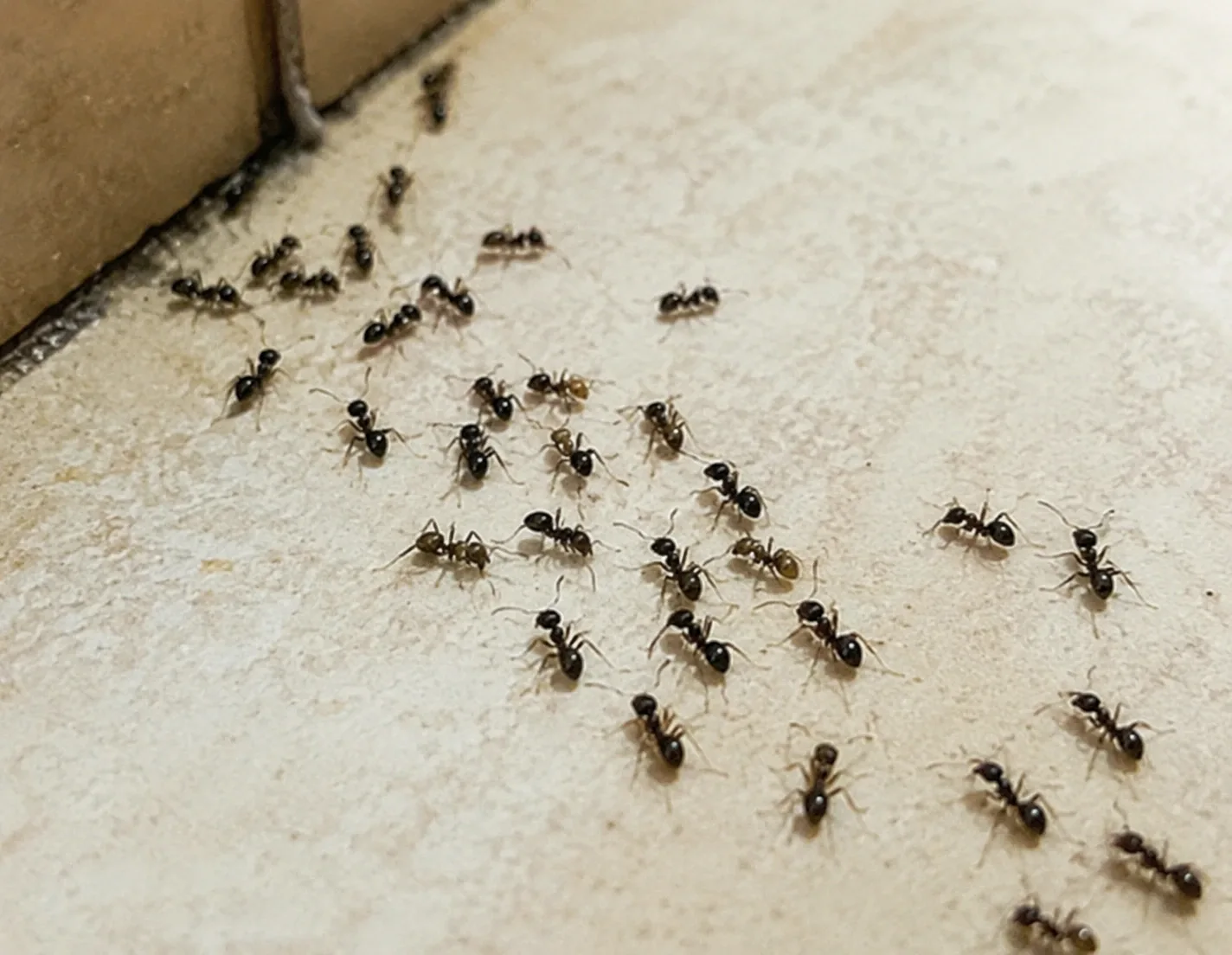
Clearwater's humidity means bugs get inside almost every home at some point, and one ant on the counter or a moth near a porch light doesn't mean anything's wrong. The question worth asking isn't whether you saw something, it's whether what you saw keeps happening, or points to something bigger than a single stray visitor.
The same pest keeps coming back
Some signs are easy to dismiss in Clearwater's climate, where bugs are a fact of life year-round. Droppings in a kitchen drawer, a hollow sound when you tap trim near a window, or the same roach problem showing up a month after you sprayed under the sink point past a nuisance. A single ant trail after rainy season rain is not that. A nest, structural damage, or anything that stings and won't leave is.
You're seeing them by daylight
Roaches and rodents move at night and avoid open space. Seeing a roach cross the kitchen floor in daylight, or a rat along a fence line before dusk, usually means the population indoors has grown past what the hidden spaces can hold. It's less about the one you saw and more about how many you didn't.
There's damage, not just droppings
Droppings in a cabinet, chewed corners on a cereal box, frayed wiring insulation, or a small pile of shed wings near a window all point to an established presence rather than a passerby. This is different from a nuisance sighting: it's physical evidence something has settled in and is feeding or nesting close by.
It stings, bites, or carries disease
A wasp nest under the eaves at a Skycrest or Countryside home, a tick picked up along the Pinellas Trail, or mosquitoes breeding in standing water after a rainy-season downpour aren't DIY calls. These aren't nuisance pests; they're health risks, and the removal itself can trigger the sting or bite you're trying to avoid.
You suspect something structural
Termites and some ants work inside wood and below a slab foundation, not on the surface, so a spray that kills what you see does nothing to a colony you can't. Florida's subterranean and drywood termites are a real local pressure, and a suspected structural pest is worth a professional look before any repair, not after.
Store-bought products aren't reaching it
Over-the-counter sprays kill what's exposed, but plenty of pests live in wall voids, under baseboards, or in cracks around a slab that a spray bottle never reaches. If you've treated the visible area twice and the infestation hasn't shrunk, the colony is somewhere the product isn't getting to, and that's a different problem than a weak spray.
An inspection costs you little to rule it out
If none of the above fit yet, that's genuinely good news, most sightings in a Clearwater home are. But if you're unsure whether what you're seeing is a nuisance or the start of something, a professional inspection identifies which pest it is, how established it is, and whether it needs treatment at all before you guess wrong.
Dealing with this in your home?
Rainy season floods yards from Countryside to Sand Key, and pests move indoors the moment ground gets wet. If your Clearwater address keeps ending up on this list, get someone to look before signing a lease or a repair estimate. Dial (727) 558-4422 and describe what you're seeing; that's usually enough to know the next step.