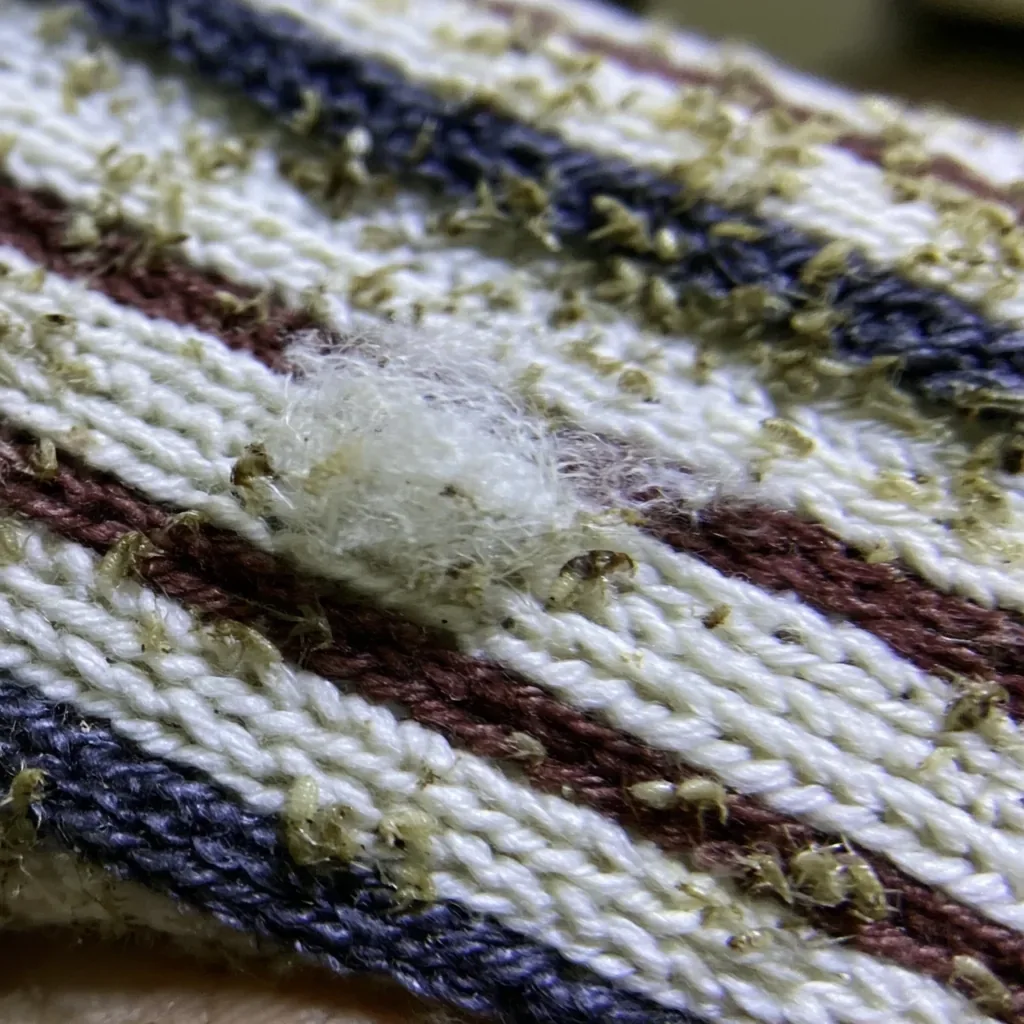
What draws pests to Clearwater properties
This species does not need soil contact the way a subterranean termite does. It infests dry wood directly, so a Clearwater home near Sand Key or Island Estates can carry a colony entirely inside attic framing, window trim or furniture with no connection to the ground at all, which is why an inspection has to check the wood itself, not just the slab perimeter.
Swarmers move by flying, and they favor wood that already has some age or weathering, which describes plenty of the older stock near Harbor Oaks and Downtown Clearwater. A gap around a window frame or an unscreened attic vent is all one needs to get in and start a gallery that goes unnoticed for years.
Rainy season brings standing water fast, and it doesn't take a storm to do it. A clogged gutter near Crest Lake Park or a low spot off Belcher Road holds water long enough for mosquitoes to use it. Pests here don't wait for summer or slow down for winter; the pressure is steady most of the year.
Spotting the Signs in Clearwater Homes
- Swarmer size
- About 1/2 inch, wings included, dark brown body
- Droppings
- Tiny six-sided pellets, the color of ground pepper
- Wood sound
- A hollow, papery tap where solid wood should answer back
- Wings shed
- Two matching pairs left on sills after a swarm
- Kick-out holes
- Pinhead-sized openings pushed clean through painted trim
- Year-Round?
- Swarms after sunset, spring through early summer, especially near lit windows
- Ballpark cost
- an estimated $449–$1400
A Pest That Often Gets Misnamed Here
Eastern subterranean termites. Both leave behind small pellet-like droppings, so people confuse this species with drywood termites' subterranean cousins. The tell is the pellets themselves: drywood frass is six-sided and uniform, like ground pepper, pushed out of a clean kick-out hole, while subterranean termites build mud tubes across foundations and rarely leave loose pellets at all. Winged swarmers settle it further, since drywood alates are larger and turn up indoors near windows, not in mud tubes along a slab edge.
Why Clearwater Homes Draw Different Pests
Treatment starts with locating the galleries, not guessing from a pile of pellets on a sill. An inspector probes suspect wood, sounds it for hollow spots and maps how far the colony runs before anything is applied, since a spot treatment on the wrong section leaves the rest of the infestation untouched and still hollowing the timber out.
Once the extent is mapped, the options are localized injection into the galleries for a contained infestation, or whole-structure fumigation when the colony has spread through framing that cannot be reached piece by piece. Which one applies depends on how far probing shows the damage has traveled through the wood, not on the size of the visible pile.
Not every pest call is a bug call. Raccoons and squirrels get into attics through soffit gaps from Skycrest to Harbor Oaks, and that's a different job than roaches or ants. The licensed pros we connect you with sort out which specialist actually fits your situation before anyone shows up at the door.
COST AND VISIT SCHEDULE FOR EACH APPROACH COMPARED
| Next Move |
What Fits Here |
|---|
| One trouble spot, not a spreading pattern | Ongoing seasonal plan |
| One fix that never quite finished the job | Year-round protection |
| A colony already settled under the slab or roofline | Stops today's problem and tomorrow's |
Chores That Pay Off Before You Pick Up The Phone
There is not much of a do-it-yourself option here. Surface sprays and store-bought foam kill the handful of visible workers but do nothing to the gallery deep inside the wood, and disturbing a suspected infestation before an inspection can scatter evidence a licensed inspector needs to find the colony's actual extent. The one thing worth doing yourself is checking window sills, attic framing and furniture in a Clearwater garage or storage room for the pepper-like droppings this species leaves, and calling in what you find rather than treating it.
Where the Real Risk Sits
West Indian drywood termites carry no disease risk to people in a Clearwater home. What they threaten is the wood itself, not anyone living in it. The real cost shows up later, in a beam, a window frame or furniture hollowed out from the inside while the surface looks fine, and in the repair bill once a licensed inspector opens the wood and finds how far the galleries actually run past what the pushed-out pellets suggested.
Get your number now
Get a firm number before anything starts. The pros serving Clearwater price West Indian Drywood Termites jobs after seeing the spot, not off a phone guess.Clearwater inspections are free, and technicians write the number down before touching anything, whether the job is Skycrest ants or a Harbor Oaks roach problem. No verbal estimate you have to remember. See the price bands and what changes them on the /cost page. pricing guide, and the service that handles this is Termite Inspection.