The Gap Where a Clearwater Slab Meets the Ground
How a dry-weather gap at the slab edge opens a path in, and when it is not the pest problem it looks like.
A slab gap opens when dry weather shrinks the soil under a Clearwater house and the ground pulls away from the foundation edge, leaving ants, roaches, and termites a straight path in. A shrinkage crack is usually thin, follows the slab perimeter, and appears after a dry stretch. A settlement crack is wider, uneven, and does not close when rain returns — that one needs a foundation contractor, not a pest treatment.
Why a slab pulls away from dry ground
A slab poured over Clearwater's sandy soil sits right on the ground, with nothing but the slab edge between the dirt and the house. When that soil dries out in a stretch without rain, it pulls away from the concrete just slightly, and that thin gap is enough for ants, roaches and subterranean termites to travel the full run from soil to sill plate without ever being seen.
This isn't unique to old houses. Newer slab construction in Countryside or Palm Harbor moves the same way an older one in Skycrest does, because it's the soil moving, not the concrete failing. The gap widens in a dry spell and can close back up once the rain returns, which is part of why it gets missed until something is already inside.
The difference between this and a real settlement problem is in the shape of the crack. Shrinkage shows as a hairline gap running evenly along the edge or through a control joint. Settlement shows as a diagonal crack, often wider at one end, usually near a corner, and it doesn't close back up when the ground gets wet again.
Reading a crack: settling house or thirsty soil
A settlement crack means the slab itself has shifted, which is a foundation question, not a pest one, and it belongs with a foundation contractor rather than pest control. A shrinkage gap is the opposite: the concrete hasn't moved at all, the soil under it has pulled back a fraction of an inch, and that's squarely a pest-entry question because it's exactly where perimeter treatment goes.
Telling them apart matters because treating a settlement crack like a pest problem wastes money, and treating a settlement crack like a foundation problem when it's really shrinkage means paying for repair work the slab never needed. A short look at the crack's shape and whether it closes after rain answers the question before either dollar gets spent.
- Thin, hairline crack running along the slab edge itself
- Gap opens wider during a dry spell, narrows after heavy rain
- No difference in floor level on either side of the crack
- Doors and windows nearby still open and close normally
- Crack appears seasonal, tied to weeks without rain
- Visible mainly where turf or mulch meets the foundation
What a perimeter treatment along the slab edge actually does
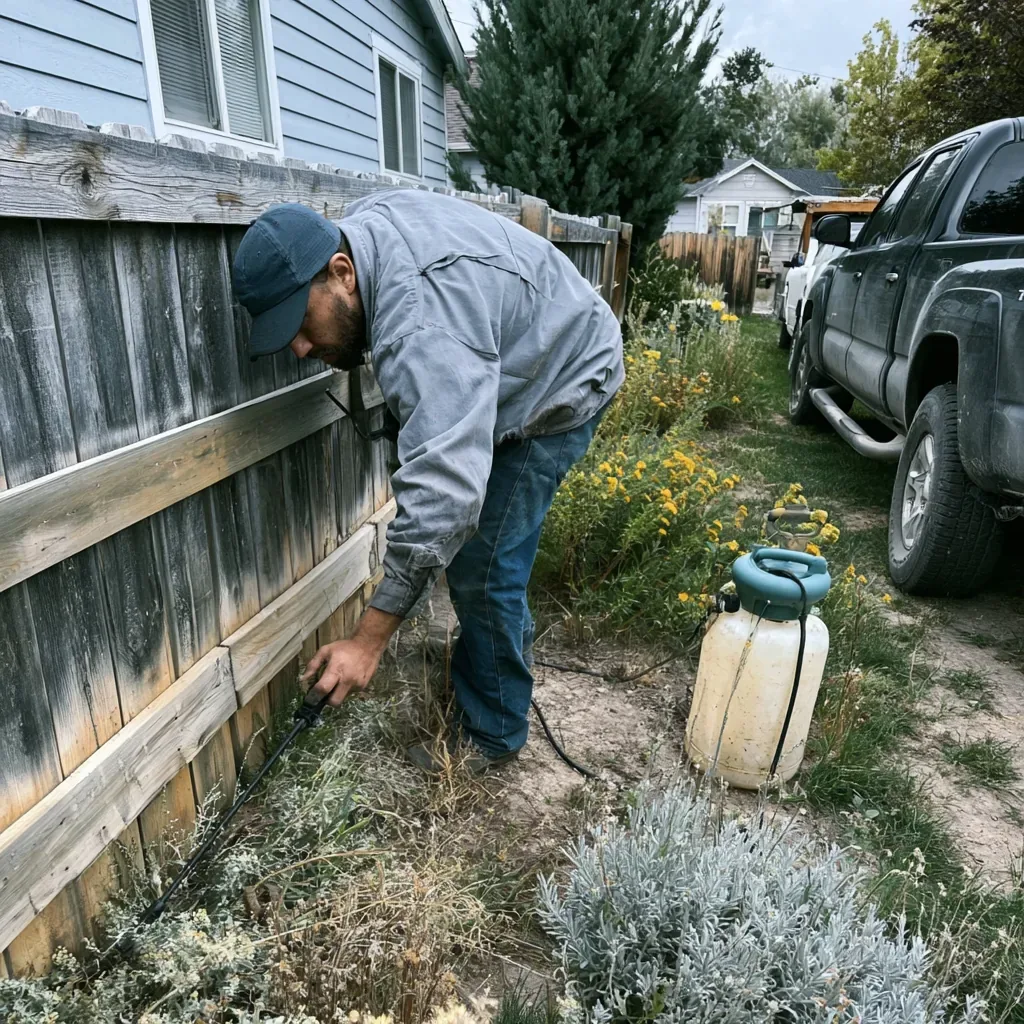
Treatment along a slab edge in Clearwater targets the soil the gap opened into, not the crack itself. Product goes into the ground right where that thin space runs, since that's the path the ants, roaches or termites are actually using, not the visible line of the crack.
It's a narrow, repeatable job rather than a whole-yard treatment. The perimeter gets walked, the gap gets identified against the slab, and the soil along that run gets treated, whether the house sits in Harbor Oaks, Morningside, or out toward Countryside where the same slab-on-grade construction is standard.
- Wider crack, often a quarter inch or more across
- One side of the slab sits noticeably lower than the other
- Doors or windows nearby start sticking or won't latch
- Crack stays open through rainy season instead of closing up
Signs that point to shrinkage instead of a shifting foundation
The reason it has to be redone isn't that the first treatment failed. Rain, especially the heavier stretches that show up June through September, moves soil around and can carry product away from the exact line it was placed on. When a dry spell breaks after weeks without rain, that edge gap often reopens or shifts slightly, and the treated zone no longer lines up with where the gap actually is.
That's a maintenance rhythm tied to Clearwater's weather, not a sign of a bad job. A homeowner near Old Bay District or out by Del Oro Groves dealing with a dry winter followed by a wet summer should expect the slab edge to need another pass, and asking upfront how that reapplication is scheduled saves a surprise later.
| Sign | Shrinkage crack | Settlement crack |
|---|---|---|
| Crack width | Hairline, under 1/8 inch | Wider at one end, growing |
| Crack path | Straight, follows a control joint | Diagonal, stair-step through block |
| Doors and windows | Stick a little in humid months | Won't latch, gap grows over time |
| Timing | Shows up after weeks without rain | Present year-round, slowly worsens |
| After a long drought breaks | Soil swells back, seal can crack or shift | Recheck the perimeter, retreat if the gap reopens |
Why ghost ants and roaches find that gap first
A quick treatment along a slab edge works only where the chemical actually reaches the soil the ants and termites are moving through. If mulch, pavers, or a drought-cracked gap sits between the treated band and the pest's path, the barrier has a hole in it. That is why the same spot in Skycrest or Countryside can act treated on paper and still let something through.
After a hard rain following weeks of dry weather, the soil swells back and can close a gap almost overnight, which looks like the problem solved itself. It has not. The insects that found the opening already know the route, and the next dry stretch reopens it. A pro re-checking a Clearwater slab edge after rainy season is not padding the visit.
Why one treatment rarely outlasts the next dry spell
None of this touches whether termites are actually inside the structure. A gap at the slab edge is an entry point, not a diagnosis, and treating the perimeter does not tell you what is happening under the baseboards or behind a wall in Harbor Oaks or Morningside. That call needs an actual inspection, not a guess based on a crack outside.
If you are trying to decide whether what you are looking at is a wood-destroying-organism problem worth a formal report, that is a separate question from the crack itself. Fixing the gap without knowing what already crossed it solves half the problem. The other half is finding out what, if anything, got in before the treatment went down.
What the gap along a slab is
- Common entry point for subterranean termites and fire ants
- Opens wider during dry spells, narrows once rain returns
- Treatment targets soil contact, not the crack itself
- Often needs repeating after a long dry stretch breaks
- Settlement cracks are a foundation issue, not a pest one
- Mulch or pavers against the slab can block treatment reach
Frequently Asked Questions
Does this gap along the slab mean my foundation is failing?
In Clearwater, it's rarely urgent by itself. A slab gap or crack is a pathway, not an emergency — unless you're already seeing ants, roaches, or termite mud tubes coming through it. If the crack runs along a slab edge near Skycrest, Countryside, or Morningside homes and pests are visibly entering, get a pro out within a few days. Bare gap with no activity can wait for a scheduled visit.
Will filling the gap myself stop the pests?
Not usually, no. This gap is mostly a soil-and-weather problem, not a structural one, so most visits are a walk around the slab perimeter rather than an inside inspection. If ants or roaches are already getting in through the gap, being home helps, since you can point to where you're seeing them indoors and that shapes where the perimeter treatment gets placed.
Why does the crack come back after every dry spell?
Often the same week, sometimes sooner if ants or roaches are already coming through into a room. This isn't urgent the way a wasp nest at a door is, but Pinellas County's dry stretches and sudden downpours mean the gap can open and close fast, so it's worth booking before it turns into an indoor problem rather than after.
Does a slab-edge treatment mean I don't need an inspection?
Yes, though how long it lasts depends on the weather more than the product. A treatment applied along a slab edge in Clearwater's dry months can get diluted or washed past once the rainy season sets in, so a repeat visit after a hard rain stretch or a drought breaks isn't a sign the first one failed. Ask what the reapplication schedule looks like before you pay for the first one.
Is a wide crack near my foundation something to worry about?
Not on its own. A shrinkage gap is a soil condition, not damage, and closing it with sand or caulk doesn't stop what's already moved past it. Termite and ant pressure at a slab edge in Clearwater comes from the soil itself, so the pros treat the ground along that edge, not just the visible crack. Filling the gap without treating first just hides where the activity is.
Have a look at the gap before you decide anything
Describe the crack, where it runs along the slab, and whether ants or roaches turned up nearby. That is enough for the licensed pros we connect you with, from Skycrest to Countryside, to judge if it is soil shrinkage or something worse.
Call (727) 558-4422