Why Clearwater homes stay on the menu
St. Augustine is the dominant lawn grass across Clearwater, from Morningside to Countryside, and it's the only host this insect feeds on here. Where that grass grows in full sun on sandy soil, the conditions for chinch bugs to build a population are already in place before anyone notices a sign of them.
Warm weather almost year-round means no hard freeze knocks the population back the way it might further north. Activity picks up through the rainy season from June into September and again in warm, dry stretches, so a lawn near Cliff Stephens Park or Ross Norton Park can show damage more than once a year.
Termite pressure in Pinellas County comes from more than one direction, and a slab foundation doesn't rule it out. Homes near Old Tampa Bay and further inland toward Countryside both see activity worth a look. A local inspection beats a guess, and it's the difference between a repair now and a bigger one later.
What Clearwater Homeowners Notice First
- Size and color
- About 1/8 inch, black with white wing patches
- Where they feed
- Base of St. Augustine grass blades, near the soil
- Damage pattern
- Ragged yellow-brown patches that spread outward, expanding
- Where damage starts
- Sunny, dry areas near driveways, sidewalks, curbs first
- Quick check method
- Float test: soapy water in a cut-open can
- Bite Risk
- Worst in hot, dry stretches, active year-round with peaks March through October
- Quoted price
- an estimated $79–$169
What Looks Similar Near Clearwater Harbor
Drought stress, fungus. Chinch bug damage gets blamed on drought or dying sod, but the tell is the pattern. Drought stress spreads evenly across a lawn and greens back up once watered; chinch bug damage stays in an expanding patch that water does not fix, usually starting near a sidewalk, driveway edge, or sunny stretch of St. Augustine in a yard off Nursery Road or Old Coachman Road, and it keeps widening as the bugs move outward.
From First Walkthrough to Follow-Up Visit
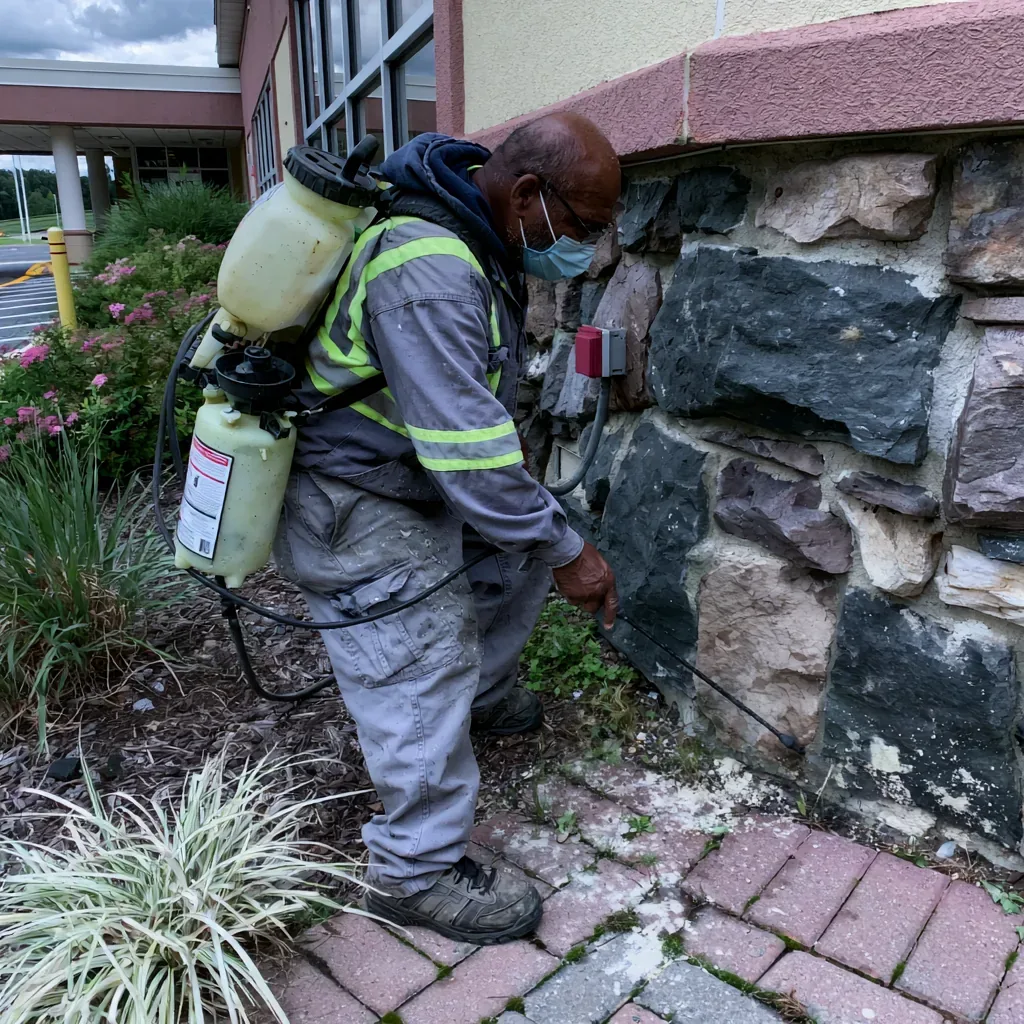
Treatment starts with confirming chinch bugs are actually present, since yellow turf in Clearwater's sandy soil has several causes. Once an inspection confirms them, usually through the float-can method at the edge of damaged grass, a targeted insecticide labeled for chinch bugs goes onto the affected turf and a buffer zone around it, not the whole yard, since they cluster where damage first appears.
A second round of attention goes to the grass itself. Overwatering and heavy nitrogen fertilizer make St. Augustine more attractive to chinch bugs, so adjusting the irrigation schedule alongside treatment matters as much as the product. In neighborhoods like Harbor Oaks or Island Estates with mature St. Augustine lawns, a follow-up check two to three weeks later catches any spot the first application missed before it spreads.
A one-time spray after seeing German cockroaches or a palmetto bug in the kitchen handles that night. It doesn't stop the next generation hatching behind the fridge or under a Sand Key condo slab. The licensed pros we connect you with can explain both options plainly, so you're choosing based on what's actually living there, not guessing.
ONE-TIME TREATMENT VS ONGOING PLAN AROUND CLEARWATER HARBOR
| Where You Stand |
Likely Cost Range |
|---|
| A single visit fixes it, no follow-up needed | Year-round pest watch |
| Same bug back before the last invoice fades | Set schedule visits |
| Damage found only after cutting into a wall | Kill the pest, block the path |
Where Your Effort Stops And A License Starts
Southern chinch bugs feed only on St. Augustine grass, so identify the pest before buying anything. Yellowing patches near Fort Harrison Avenue lawns or in Countryside that don't green up with water usually mean chinch bugs, not drought stress. A homeowner can float-test: cut both ends off a coffee can, push it into the turf at the yellowing edge, fill with water, and count bugs floating up after ten minutes. Beyond that, watering deeply and less often, and not over-fertilizing with nitrogen, keeps the grass from feeding an infestation before it starts.
How This Actually Affects Your House
Chinch bugs carry no disease risk to people or pets and don't bite. The damage is entirely to the lawn, not to health. They inject a toxin while feeding that keeps grass from recovering, so a section of St. Augustine near a driveway in Skycrest or Del Oro Groves can die outright rather than just thin out. The real cost is replacement sod and irrigation, not a medical concern, which is why most Clearwater households treat this as a yard problem to fix rather than something to worry about indoors.
See a real Clearwater price
Southern Chinch Bugs costs shift with the property, not a fixed menu price. Tell the licensed pros we connect you with what's happening at your Clearwater address.Clearwater inspections are free, and technicians write the number down before touching anything, whether the job is Skycrest ants or a Harbor Oaks roach problem. No verbal estimate you have to remember. See the price bands and what changes them on the /cost page. pricing guide, and the service that handles this is Yard & Lawn Pest Control.