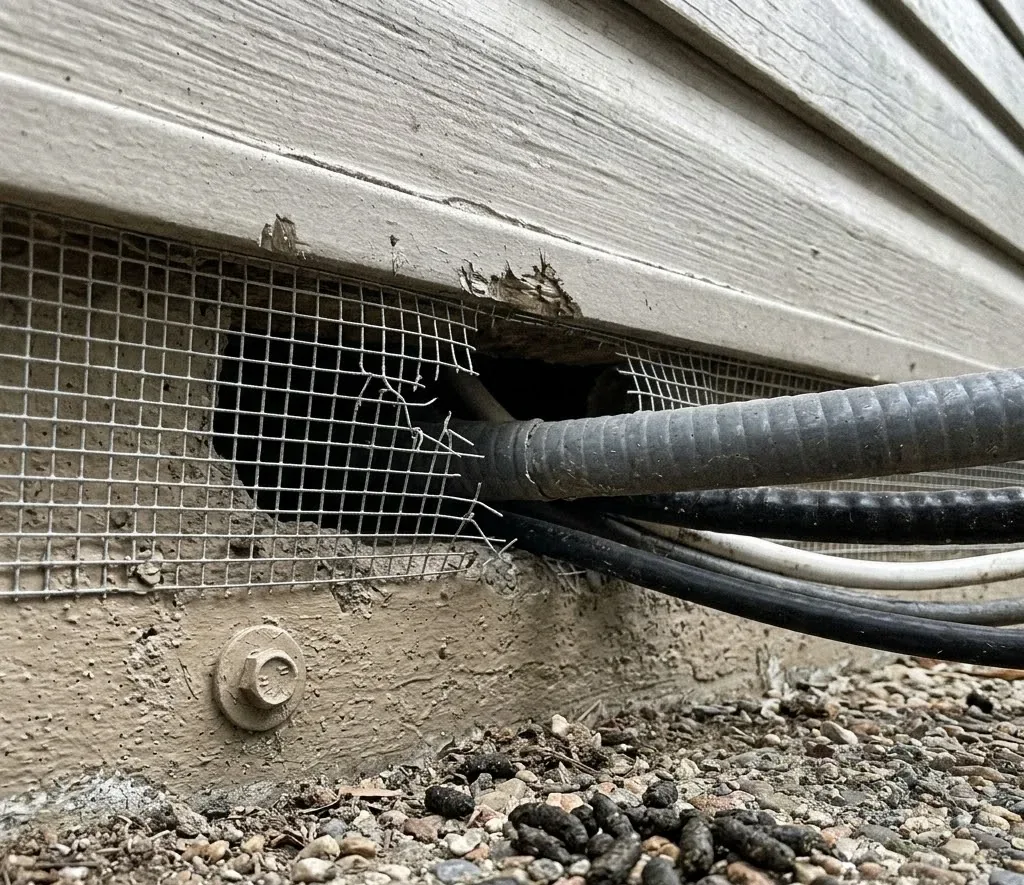
Rodent Exclusion
Trapping clears what's inside. Sealing the entry point stops the next one from moving in.
Learn about Rodent ExclusionInland slab homes here face steady ant, roach, and termite pressure from sandy soil and yard drainage rather than coastal flooding.
Pinellas Park sits inland along Park Boulevard, away from Clearwater's beachfront pressures but no stranger to pests of its own. The city's older sections mix mid-century block homes with newer construction, all slab-on-grade, which means ground moisture works its way toward the foundation edge rather than a basement. Sandy soil drains fast after a downpour but still leaves damp mulch beds and shaded yard corners where ants and roaches settle in. Homeowners here deal with the same subterranean termite risk found across Pinellas County, since slab perimeters give termites a direct, hidden path from soil to wood framing. Compared to Clearwater's barrier-island stock, Pinellas Park's inland lots see less standing water from tidal flooding but plenty from summer downpours pooling in yards and along fence lines, which keeps mosquito treatment relevant most of the year.
From Island Estates seawalls to Countryside yards, what draws pests in shifts block by block across Clearwater.
Most of Pinellas Park is 1950s-70s ranch homes and postwar subdivisions, with industrial corridors along 49th Street. On a slab house the trouble is never the middle of a wall — it is the seams: where the soffit meets the fascia, where a hose bib or dryer vent passes through block, where the weep holes sit at the slab edge. Those are the first things worth a look.
Inland yard drainage and shaded mulch beds keep ants and roaches active nearly year-round, with summer downpours adding a mosquito push. A one-time spray misses what's coming next month near Old Bay District; a standing schedule catches it before it's a problem.
A fair share of the work around Pinellas Park is not single-family. Shared walls let pests move between units, so treating one space on its own rarely holds and the building gets looked at as a whole.
Home size, pest type, and how far a property sits from Sand Key or Downtown Clearwater all shift the final price.
| Service | Estimated cost |
|---|---|
| Rodent Exclusion | an estimated $189–$499 |
| Yard & Lawn Pest Control | an estimated $79–$169 |
| General Pest Control | an estimated $99–$239 |
| Termite Inspection | an estimated $449–$1400 |
Park Boulevard's mix of older and newer slab homes drives steady ant, roach, and termite-inspection demand.
Yard drainage after summer storms keeps mosquito treatment a regular need across inland lots here.
Soffit and roofline gaps on older homes bring squirrels and raccoons into attics through the year.
Trapping clears what's inside. Sealing the entry point stops the next one from moving in.
Learn about Rodent Exclusion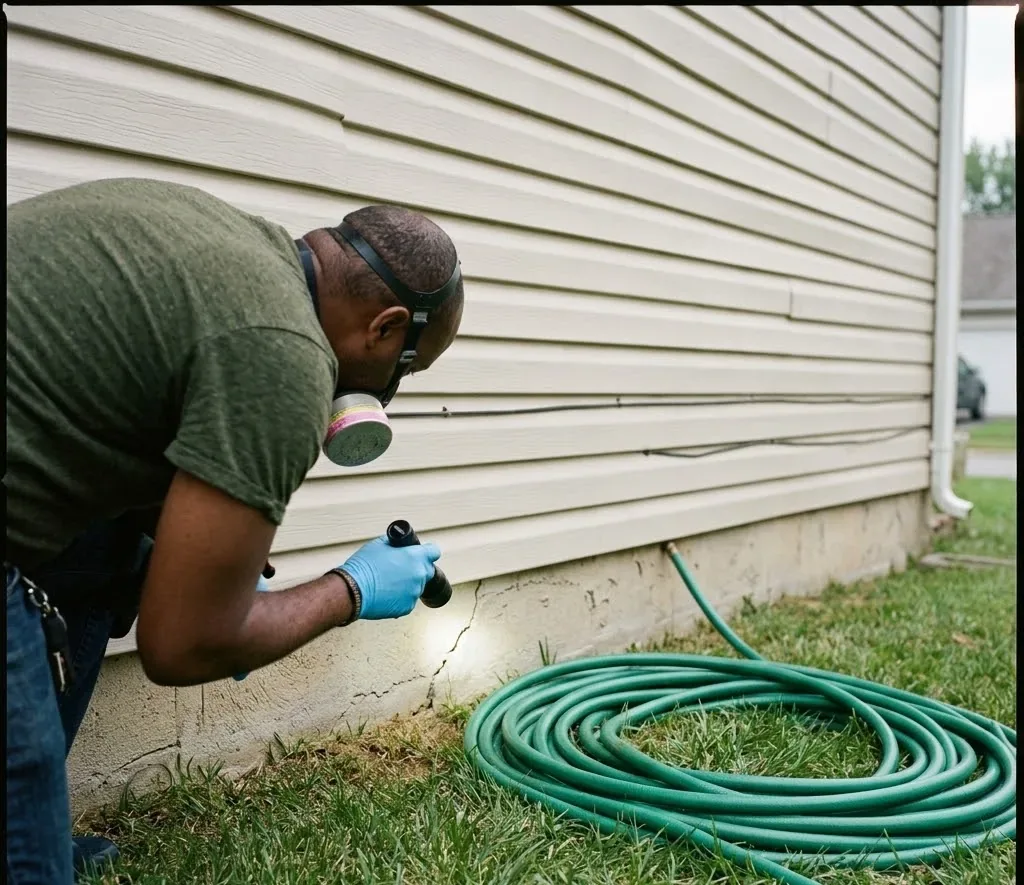
Fire ant mounds, grubs, fleas, and ticks in the yard, treated at the turf and stopped at the door.
Learn about Yard & Lawn Pest Control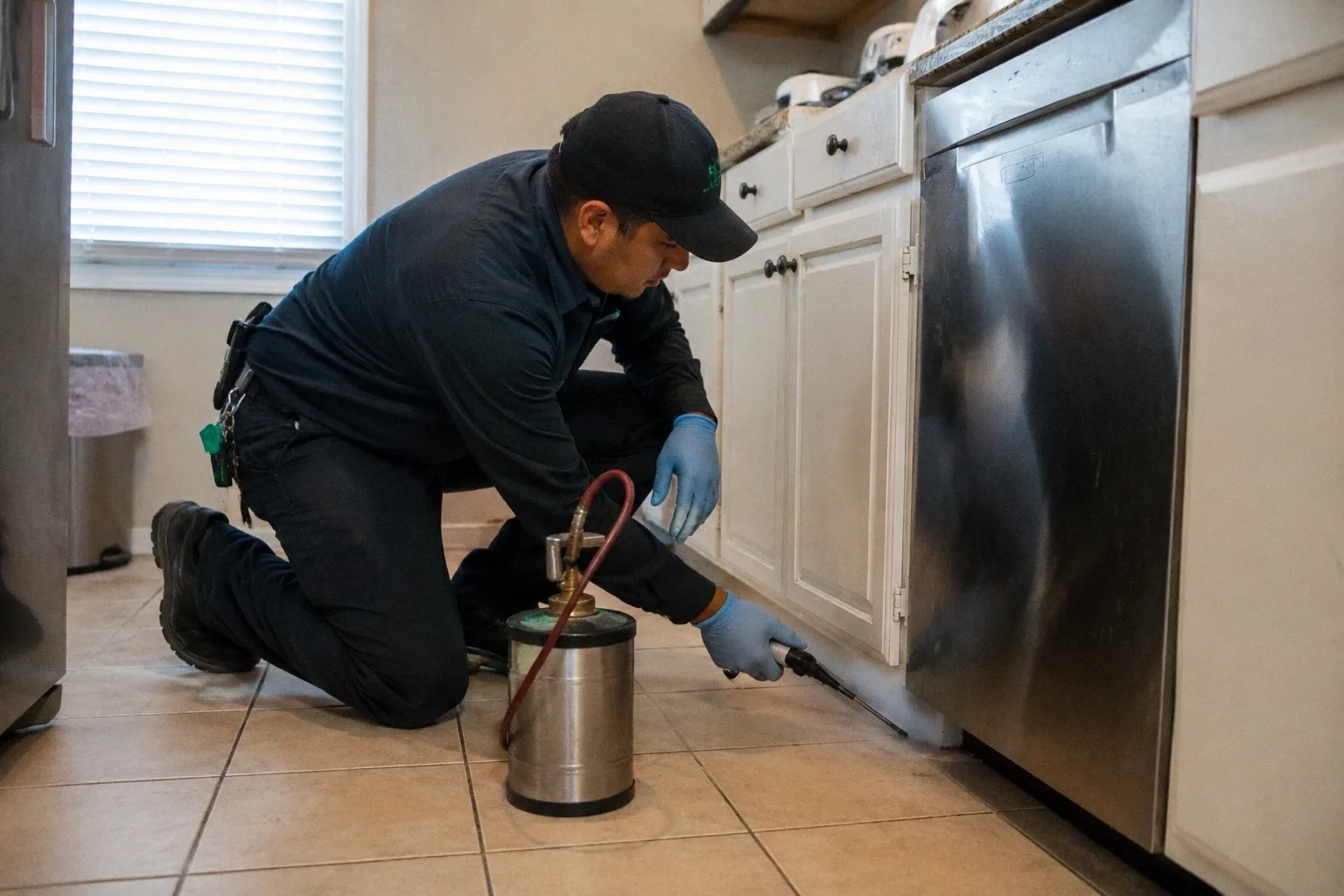
One plan for the ants, roaches, spiders and silverfish that never really leave a Clearwater house alone.
Learn about General Pest Control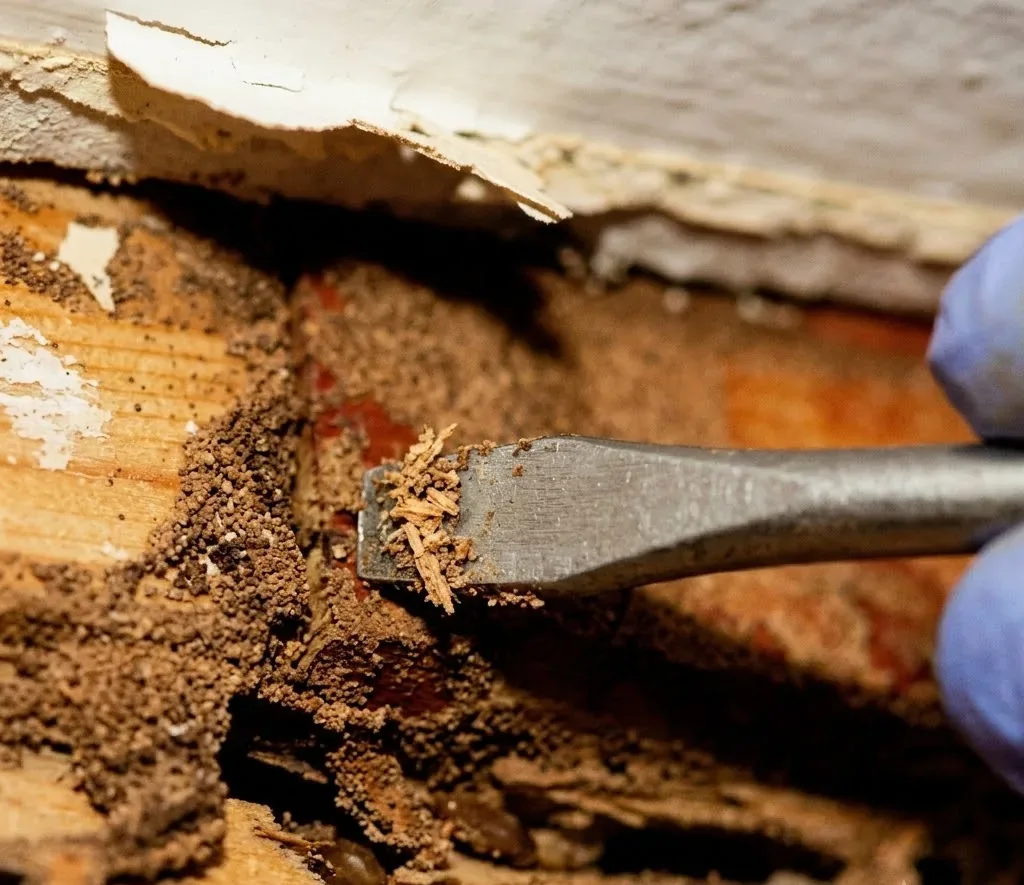
A close look at the foundation, sill plates, and attic for the mud tubes and wood damage subterranean termites leave behind.
Learn about Termite InspectionRain saturates the sandy soil around the slab edge and pushes ants, especially ghost ants and fire ants, up out of the ground toward dry shelter. They find gaps at the foundation line or under siding. Treating the perimeter soil and sealing visible gaps stops the cycle better than spraying indoors alone.
Yes. Slab construction hides the entry point, since termites travel up through foundation cracks or utility penetrations without leaving visible mud on an exposed beam. An inspection checks the slab perimeter, door frames, and any wood-to-soil contact points around the yard, not just the attic.
A clean kitchen does not stop palmetto bugs and German cockroaches from entering through door gaps, dryer vents, or plumbing penetrations. Cleanliness limits what feeds them once inside, but the entry points around the slab foundation are what let them in to begin with.
Squirrels and raccoons both use soffit gaps and roofline seams to get into attics across this area. Scratching or thumping overnight usually points to raccoons, while daytime scurrying sounds more like squirrels. Both need the entry gap sealed after removal or they, or another animal, come right back.
Yes. Pinellas Park sits inland from Clearwater along the Belcher Road corridor, and the licensed pros we connect you with cover it regularly. Same slab foundations, sandy soil, and high water table as the rest of Pinellas County, so subterranean termites, ghost ants, and roof rats showing up in attics are common calls here too.
Termite pressure comes mainly from Eastern subterranean and Formosan subterranean termites, plus West Indian drywood termites, all active regardless of season. A slab foundation doesn't stop them from finding a way up through expansion joints or door thresholds near Cleveland Street storefronts.
If you are near Harbor Oaks, Del Oro Groves or anywhere else inside this coverage area, a call settles whether the visit can happen and when. Clearwater properties near the water table often show different pressure than ones further from Old Tampa Bay, so location shapes what gets checked first. The look is free regardless of what turns up, and anything urgent after a heavy rain event usually gets bumped ahead of routine calls.
Call (727) 558-4422