A Clearwater house can carry mice for weeks before anyone spots one. They move at night, stay close to walls, and keep out of sight in the attic or behind the water heater. What gives them away isn't a sighting, it's the trail they leave doing ordinary mouse things: eating, traveling, sleeping.
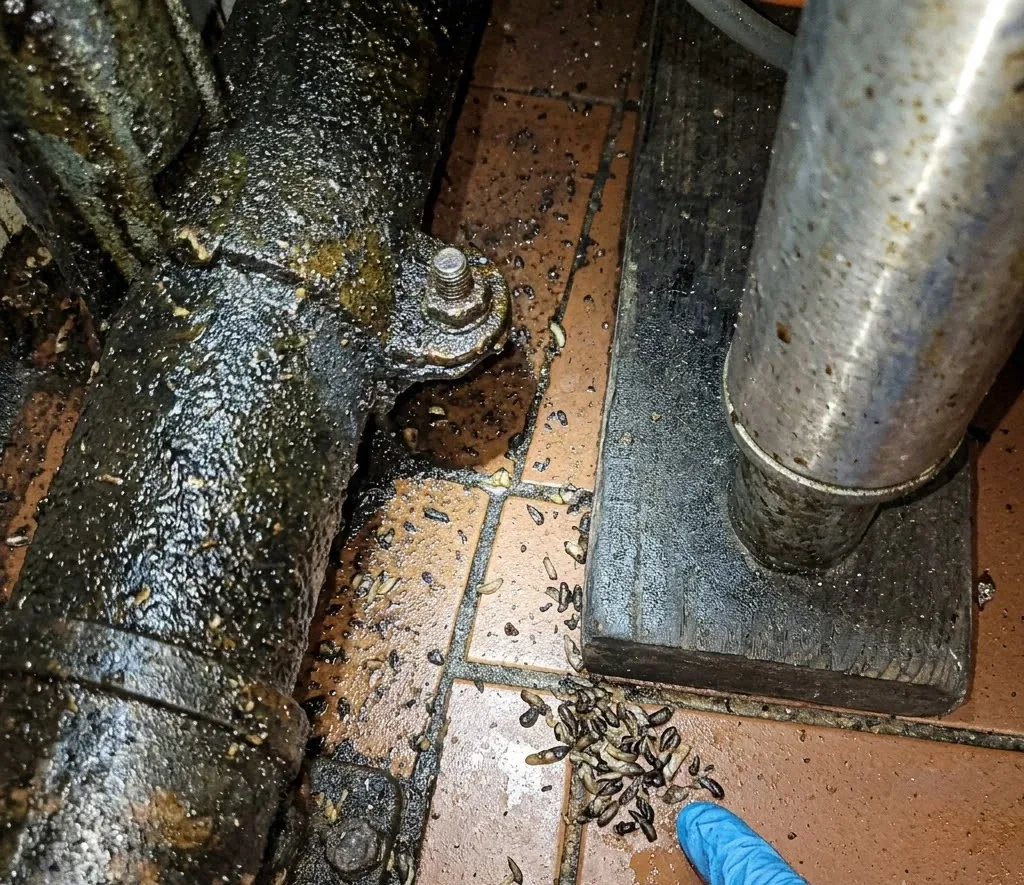
Droppings near food and cabinets
Droppings usually turn up first, scattered along a baseboard or tucked inside a cabinet corner in a Clearwater kitchen or garage. Fresh ones are dark and soft; they harden and gray with age. Look next for gnaw marks on cardboard, a greasy smear along a runway, or a faint musky odor near the nest — each sign points to how long mice have been active.
Noises after dark
Scratching in the ceiling or a faint scurrying behind the stove around dusk is mice, not the house settling. Attics and soffits here are common raccoon and squirrel entry points too, but mice sound lighter and quicker, more like scratching paper than footsteps.
Gnaw marks on stored items
Mice gnaw to keep their front teeth short, and they'll work through cardboard, plastic packaging, and wood trim to do it. Chewed corners on stored boxes in a garage or closet, or shredded bits near baseboards, point to activity even if you never hear a thing.
A nest tucked out of sight
A nest is shredded paper, insulation, or fabric packed into a tight ball, usually behind an appliance, inside a wall void, or in an unused corner of the attic. Finding one means mice have settled in, not just passed through once.
A stale, oily smell
An ammonia-like odor that lingers in a closed cabinet or closet, stronger than normal household smells, comes from mouse urine building up in one spot. In a small kitchen or pantry in an older Skycrest or Morningside home, it's often noticed before anything else.
Grease marks along a runway
Mice reuse the same path along a wall or under a cabinet edge, and the oil in their fur leaves a faint dark smudge over time. A grease mark low on a baseboard, especially near a gap or pipe entry, marks a runway they've used more than once.
A pet acting strange
Cats and dogs pick up on movement and sound long before a person does. A pet suddenly staring at the stove, pawing at a cabinet, or refusing to leave a spot near the wall in a Countryside or Del Oro Groves kitchen is often reacting to something already living there.
Dealing with this in your home?
Rainy season floods yards from Countryside to Sand Key, and pests move indoors the moment ground gets wet. If your Clearwater address keeps ending up on this list, get someone to look before signing a lease or a repair estimate. Dial (727) 558-4422 and describe what you're seeing; that's usually enough to know the next step.