Clearwater sits on sandy, slab-on-grade soil next to Old Tampa Bay and the Gulf, and that mix of humidity, standing water, and year-round warmth means pests never really go dormant here. The list below runs roughly in the order a homeowner from Island Estates to Countryside is likely to meet them, worst nuisance first, with a link to the full answer on each.
1. Ghost ants and fire ants
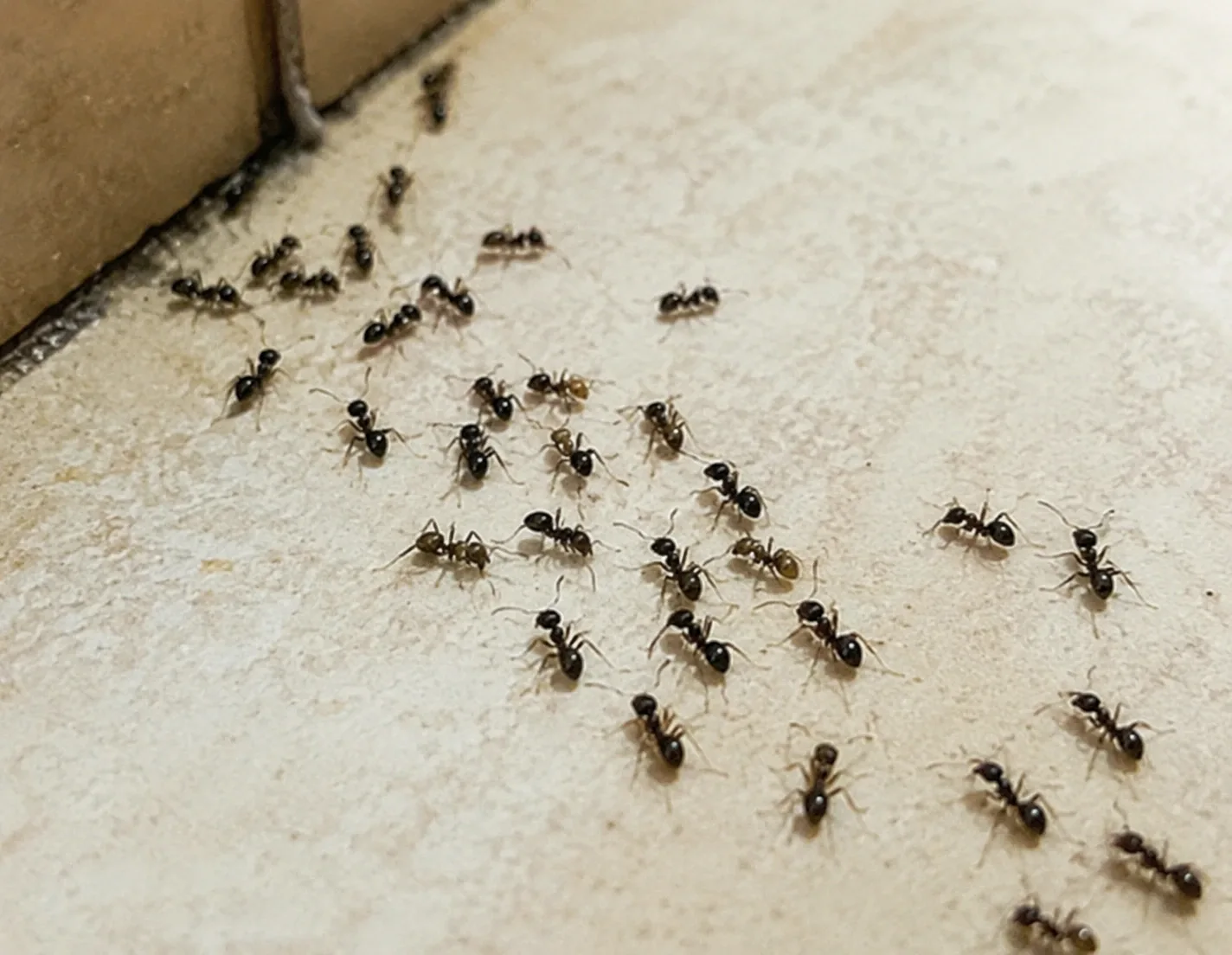
Ghost ants are pale, nearly see-through, and trail along kitchen counters and baseboards chasing anything sweet. Fire ants build mounds in lawns and bite hard when disturbed, common in yards near Crest Lake Park and Ross Norton Park. Both nest outdoors and forage in through the smallest entry point, so seeing a trail is a sign of a colony, not a stray ant.
2. Subterranean and drywood termites
Florida carries pressure from subterranean termites working through the soil year-round and drywood termites that colonize dry wood above grade, including furniture and door frames. Mud tubes on a slab foundation near Fort Harrison Avenue-era homes or discarded wings after a swarm are the sign. Termites work quietly for years, so by the time damage shows, it's already done.
3. German cockroaches and palmetto bugs
German roaches are small, fast, and live indoors near kitchens and bathrooms, multiplying quickly in humid air. Palmetto bugs, the local name for the larger American roach, come in from outside through soffits and drains and don't spread through a home the way German roaches do. Either one contaminates food and counts as a health concern, not just an eyesore.
4. Mosquitoes
Mosquitoes breed in standing water left in gutters, plant saucers, and low spots after a rainy-season downpour, and heavy rain or a king tide near Clearwater Harbor can leave puddles for days. They're a year-round nuisance here, not a summer-only one, and dumping standing water around the yard is the one habit that changes the numbers fastest.
5. Rodents: roof rats and house mice
Roof rats climb well and get into attics through gaps at the roofline or soffit, while house mice stay lower, favoring garages and kitchens. Both need only a small entry point and leave droppings, chew marks, and a musky smell behind. Once one gets in near Skycrest or North Greenwood, others usually follow the same gap.
6. Raccoons and squirrels in the attic
Raccoons and squirrels push into attics through torn soffit vents or gaps at the roofline, especially around older homes near Morningside or Clearwater Heights. They tear insulation, chew wiring, and leave waste behind, and a vacant attic space rarely stays vacant long once an animal finds the opening.
7. Spiders
Most spiders around Clearwater homes are harmless and actually useful, since they feed on other insects. A web that keeps reappearing in the same corner of a garage or lanai is less a spider problem and more a sign that something smaller is feeding it, which is worth tracing back to the source.
8. Wasps and other stinging insects
Wasps and yellowjackets build nests under eaves, in shrubs, and sometimes inside wall voids, and colonies grow largest during rainy season when food is easiest to find. A nest near a doorway or a play area around Del Oro Park stops being background noise fast once someone gets stung.
9. Fleas and ticks
Fleas and ticks ride in on pets after time outdoors, whether that's a yard in Countryside or a walk on the Pinellas Trail, and both breed indoors once established in carpet and bedding. Ticks quest from grass and brush onto skin, and a pet scratching more than usual is often the first real sign.
10. Mold following moisture
Mold isn't an insect, but it shows up in the same humid, high-water-table conditions that draw the pests above, especially after flooding or a slow leak near a slab foundation. Musty smell and dark spotting near baseboards are the sign, and it tends to follow the same moisture that draws roaches and ants in the first place.
The common thread
Nearly every pest on this list gets in through a gap, a leak, or standing water, from a soffit vent near Harbor Oaks to a puddle after a heavy rain near Sand Key. Sealing entry points and clearing standing water handles more of this list at once than treating any single pest on its own.
Dealing with this in your home?
Rainy season floods yards from Countryside to Sand Key, and pests move indoors the moment ground gets wet. If your Clearwater address keeps ending up on this list, get someone to look before signing a lease or a repair estimate. Dial (727) 558-4422 and describe what you're seeing; that's usually enough to know the next step.