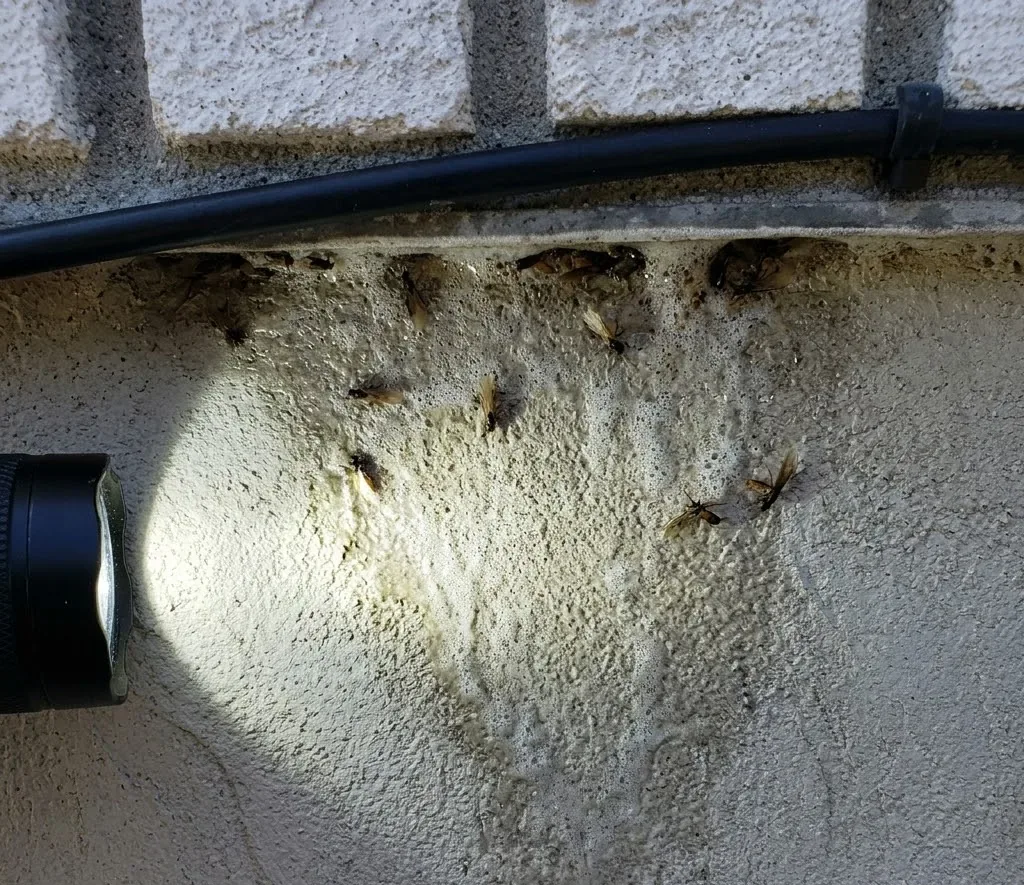
Yes, and Clearwater sits squarely in it. Subterranean termites work the sandy soil under slab foundations from Skycrest to Countryside, building colonies that send swarmers out each year looking for new ground. The pressure is steady, not seasonal, since nothing here gets cold enough to slow a colony down. Whether that pressure is worth treating depends on the house, but the presence of termites in this county isn't in question.
Warm weather keeps colonies active
Warm, humid conditions year-round mean colonies never really go dormant the way they might farther north. There is no hard freeze here to slow a colony down or interrupt a swarm season, so pressure on a house builds steadily rather than in short seasonal bursts, and it rarely lets up for long.
Soil and water raise the risk
Subterranean termites travel through soil, so proximity to water raises the odds. Neighborhoods near Alligator Creek, Stevenson Creek, or the Intracoastal Waterway sit on ground that holds moisture longer after rainy-season storms, and moist soil is exactly what a colony needs to keep expanding toward a foundation.
Drywood termites skip the soil
Drywood termites are the other established species locally, and they skip soil entirely, moving straight into exposed wood like eaves, fascia boards, or attic framing. A house near Sand Key or Island Estates with salt air and older wood trim can carry a drywood colony that a soil treatment alone would never reach.
What the risk means for your house
None of this means every house is doomed, but it does mean skipping inspection is a bet. A colony can work for years before a swarm gives it away, and by then repair costs more than treatment would have. An inspection tells you which risk, if any, actually applies to your address.
Dealing with this in your home?
Rainy season floods yards from Countryside to Sand Key, and pests move indoors the moment ground gets wet. If your Clearwater address keeps ending up on this list, get someone to look before signing a lease or a repair estimate. Dial (727) 558-4422 and describe what you're seeing; that's usually enough to know the next step.