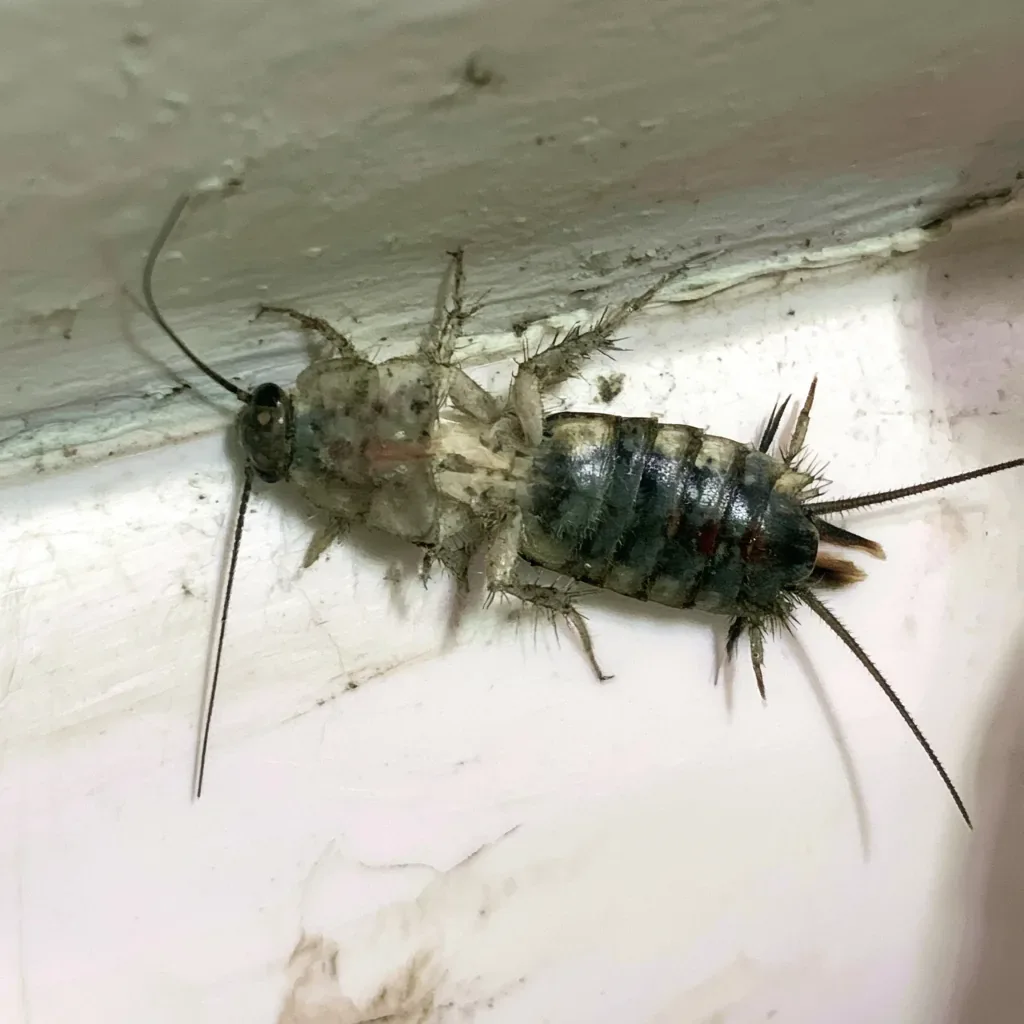
Palmetto bug is a Florida nickname, not a species. In Clearwater it usually means the American cockroach, a large, reddish-brown insect that lives outdoors and only wanders indoors when weather pushes it there. Seeing one after a storm does not mean an infestation is starting inside your home.
Where this roach actually lives
This insect lives outside year-round around Clearwater, in mulch beds, palm thatch, storm drains and irrigation boxes. It needs moisture and shelter, not a kitchen. Heavy rain during rainy season floods those outdoor spots, and the roach simply looks for the nearest dry gap, which is often a door threshold or garage.
Not a housekeeping problem
A palmetto bug indoors is not a judgment on housekeeping. It comes from outside because outside got wet or hot, not because food was left out. Homes near Alligator Creek or Stevenson Creek, or anywhere with heavy landscaping, see more of them simply from proximity to moisture, not from anything residents did wrong.
Why temperature swings bring them in
Temperature swings matter too. A sudden cool front after a warm stretch, or the reverse, can send these roaches looking for a stable spot. Clearwater's coastal winters rarely freeze, but even a mild dip changes what is comfortable outside, and a slab foundation with unsealed gaps offers an easy alternative.
Find the real entry points
Exclusion is the real fix, not spraying room by room. Check where utility lines and pipes enter the slab, where the garage door meets the floor, and where soffits meet the roofline near the attic. Gaps there are entry points a palmetto bug will use the same way a squirrel or raccoon does.
Seal doors and garage gaps
Weatherstripping on exterior doors and garage doors closes one of the most common paths in. Door sweeps are cheap and make a real difference on older homes around Skycrest or Morningside where doors have settled slightly over the decades. Check the fit at both the bottom and the side hinges.
Pull mulch back from the foundation
Outside, pull mulch and dense groundcover back a foot or two from the foundation wall. Palmetto bugs shelter in exactly that kind of cover during the day. This applies whether you are near Coachman Park's landscaping style or a quieter residential yard off Nursery Road.
Clear standing water nearby
Standing water is the other half of the problem. Clogged gutters, a low spot that holds water after rain, or a birdbath that never dries out all give this roach somewhere to drink and breed nearby. Clearing gutters and grading obvious low spots removes that draw before it starts.
Storm drains and driveway gaps
Storm drains and irrigation boxes near the street are a known source, and there is not much a homeowner can do about the drain itself. Focus instead on sealing the gap where a driveway meets the garage slab, since that is the route the roach actually takes from drain to house.
Where indoor sightings cluster
Indoor sightings usually cluster near ground-floor doors, garages and laundry rooms, since those areas sit closest to grade. Upper floors and interior rooms rarely see them unless the exclusion work at the perimeter has real gaps. That pattern is itself a clue that this is an outdoor pest passing through.
How this differs from German cockroaches
This is a different problem from a German cockroach, which lives and breeds indoors around kitchens and stays there. If sightings are limited to one or two roaches near an entry point, exclusion work solves it. Repeated indoor breeding activity is a different question with a different answer.
When exclusion alone isn't enough
If sealing entry points and clearing moisture around the foundation does not stop the sightings, a perimeter treatment from the licensed pros we connect you with targets the harborage areas directly. That is a targeted step, not a sign the exclusion work was wasted.
Dealing with this in your home?
Rainy season floods yards from Countryside to Sand Key, and pests move indoors the moment ground gets wet. If your Clearwater address keeps ending up on this list, get someone to look before signing a lease or a repair estimate. Dial (727) 558-4422 and describe what you're seeing; that's usually enough to know the next step.