Offices
Shared walls, shared blame
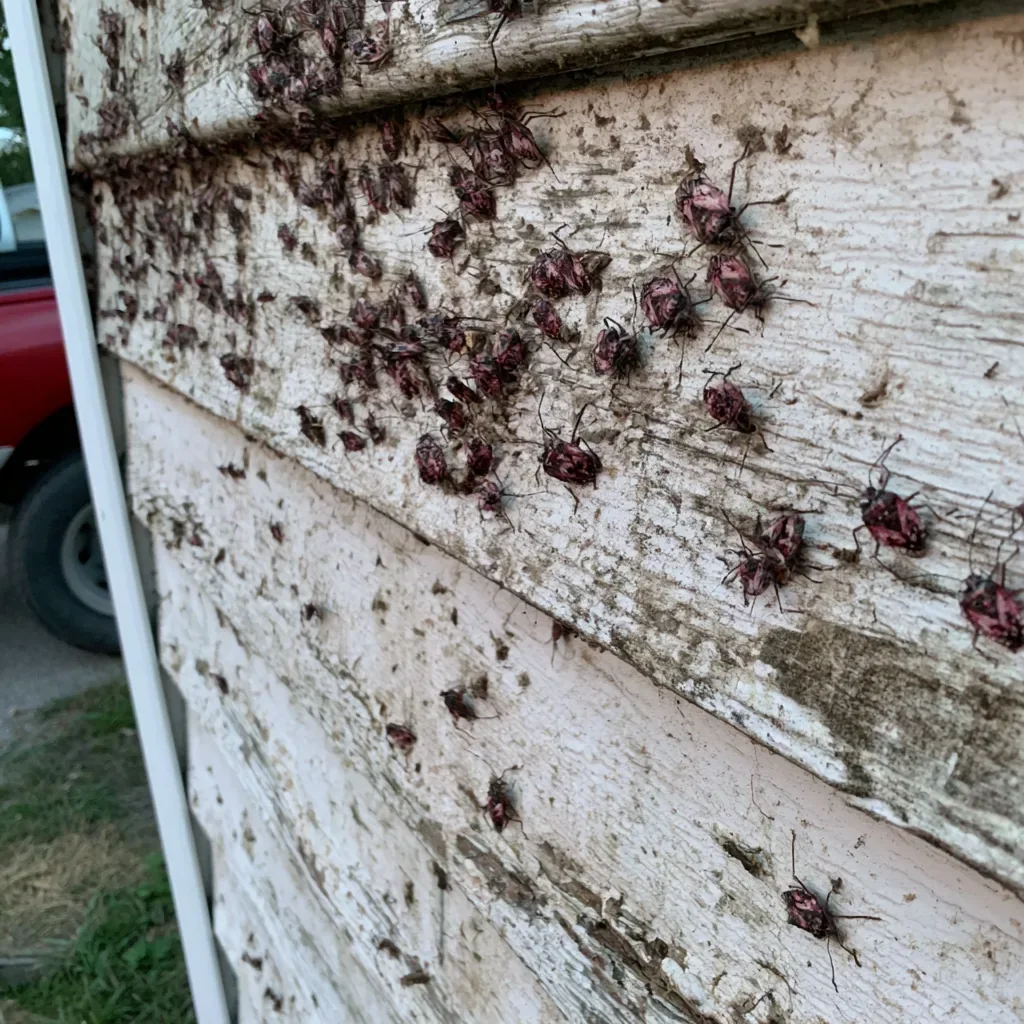
A landlord's duty and a tenant's duty split at a line Florida law actually draws.
Under Florida law, a residential landlord must make reasonable provisions to exterminate roaches, ants, rodents, wood-destroying organisms and bed bugs in a rental unit, and must abate rent if the tenant has to vacate for treatment. Tenants are separately required to keep the unit clean and use fixtures properly, since poor sanitation can draw pests back after a landlord pays for treatment.
Walls do not mean much to a cockroach. Behind the drywall in a Clearwater apartment building, one stud bay runs into the next, kitchens stack on kitchens floor after floor, and a gap around a pipe chase gives a straight run from a first-floor unit to the third. A tenant who keeps a spotless kitchen still shares that framing with the unit that does not.
The common areas carry their own load. A trash room in a Clearwater building that gets rinsed on a schedule and one that does not are very different buildings to a roach or a rat, and the same goes for a shared laundry room, a mail lobby, or a boiler closet nobody checks between service calls. These are landlord-controlled spaces, not any one tenant's mess.
Local stock matters here too. Older Clearwater buildings near the Cleveland Street District and garden-style complexes off Missouri Avenue often have shared attic space above a run of units, plumbing chases that were never fully sealed at construction, and enclosed porches added on after the fact. None of that shows up on a lease, but all of it is a route.
Property managers in Clearwater see the same pattern with roaches and bed bugs: one tenant calls, one unit gets treated, and the problem returns within a month because it never left the building. Complaints about a single apartment near Skycrest or a cluster of townhomes off Countryside Boulevard usually point to activity moving through shared walls and plumbing lines the whole building depends on.
Bed bugs move the same way on a slower schedule. They travel by route, not by flight, so a unit next to an untreated one at turnover, or one that shares a hallway with a heavy-turnover unit, picks up a problem that started somewhere else entirely. Treating one apartment in a building near Harbor Oaks and calling it resolved rarely holds.
A better scope starts with the unit that complained, then checks its neighbors on both sides and the floors above and below before anyone decides the job is done. Common areas matter here too — laundry rooms, trash chutes and mailrooms in an older Clearwater building near the Cleveland Street District carry activity between units as reliably as a shared wall does.
| Factor | Single unit treatment | Building-wide treatment |
|---|---|---|
| What gets inspected | The one apartment that called it in | That apartment, its immediate neighbors, and connecting common areas |
| What happens next door | Nothing, so activity behind the next wall goes untouched | Checked and treated in the same visit if active |
| Sealing work | Skips the pipe chase since it sits outside that apartment | Closed where risers and baseboards run between units |
| How it usually ends | Return calls to the same building, complaint by complaint | Activity drops across the building and stays down |
| Cost pattern | Repeat calls to the same unit, month after month | One coordinated visit, then a set recheck schedule |
| What it tells the tenant | Only their complaint mattered, not the source | Management tracked the problem past their own door |
Florida puts the extermination duty on the landlord. Under section 83.51 of the Florida Statutes, a landlord of a residential unit has to make reasonable provision for exterminating rats, mice, roaches, ants, bedbugs and wood-destroying organisms, and where a tenant has to move out for the treatment, the rent is abated for that period rather than the landlord being liable for damages.
That same law asks the tenant to keep the unit clean and use the fixtures properly, which matters because a unit run poorly can feed a population the landlord is still responsible for controlling. For a manager overseeing a building near Del Oro Groves or Skycrest, that split means documentation on both sides earns its keep.
For a tenant in a Clearwater rental, put the report in writing to the landlord or management office, keep a copy, and note the date and what you saw. If vacating the unit becomes necessary for the treatment to work, Florida law removes the landlord's liability for that disruption but still requires the rent to be abated for that period.
Cost for a multi-unit program in Clearwater turns on how many units the landlord wants covered, how many test positive once the licensed pros we connect you with have looked past the unit that complained, and whether common areas or a full building-wide pass get added to the scope.
The pest plan is rarely the hard part. Getting into forty units near Countryside Boulevard on the same two days, with prep done in each one before the tech arrives, is what actually determines whether the job holds. A landlord who treats access as an afterthought ends up re-booking the same stack every month.
Notice has to name a date, not a window, and it has to reach tenants who are not checking a bulletin board in the lobby. A building off Belcher Road with a mixed lease-renewal calendar means half the residents get one week's warning and half get none unless someone tracks it unit by unit.
Turnover is the easiest access a landlord gets all year. A vacant unit near Skycrest or Morningside can be opened at the baseboard, checked behind the stove, and sealed at the plumbing penetration without asking anyone to move a couch first. Skipping that step before a new tenant signs just carries the same problem into the next lease.
Roaches and bed bugs both move through a building, but they do not move the same way, so one visit does not cover both. Roaches follow water and food waste, which means kitchens, trash chutes, and any unit near a dumpster pad get checked first. Bed bugs follow people and furniture, so they show up along whatever route residents actually walk.
Bed bugs raise a disclosure problem roaches don't. A tenant who thinks reporting a bed bug means a fine, a lease violation, or getting blamed for bringing them in will say nothing and just move to the couch, which spreads the problem instead of stopping it. A written policy that separates reporting from blame gets more units flagged early.
Put one rule in the lease or the building notice: no dragging a mattress or couch through a shared hallway to the dumpster. That walk drops bugs the whole length of the corridor, past doors that had no problem before. Bag it, seal it, and route it straight out, not through the stairwell everyone else uses.
Bayfront to inland, the pros we connect you with reach every blockSand Key, Island Estates and Harbor Oaks. Multi-property owners pick which address gets the first look, whichever one is causing the most trouble
Commercial accounts near Downtown Clearwater get quoted per visit, not per job. A typical site in that range starts around an estimated $89–$249 a visit, with square footage and required documentation moving the number from there.Commercial walkthroughs around Clearwater, from Cleveland Street storefronts to Countryside offices, cost nothing and end with a written scope, not a verbal guess. Nothing gets scheduled until the paper matches what was discussed. Full bands sit on the /cost page. pricing guide, and the commercial overview covers how a scheduled program works.
Shared walls, shared blame
What's on the shelf, and who saw it first
Big doors, deep racking, fast freight
Yes, under Florida law the landlord holds the extermination duty for a residential unit, and that includes roaches, ants, rodents, wood-destroying organisms, and bed bugs. A single tenant's habits can make a local problem worse, but they do not transfer the underlying responsibility. In a Clearwater building with shared walls and shared plumbing chases, treating only the unit that complained rarely settles anything for long.
Not automatically, but it usually should be. If the population is limited to fixtures inside one unit, treating that unit alone may be enough. Once inspection turns up activity in a shared wall, a common area, or an adjoining unit, in most Clearwater buildings the practical scope becomes the building, or at minimum the affected wing, because the insects were never contained to one door.
Plan on more than one visit, especially with roaches or bed bugs in an established building. Eggs already laid hatch after the first treatment, and a building-wide job near Countryside or along Belcher Road means coordinating access across several units on a schedule, not one appointment. A single visit that looks successful for two weeks is not the same as the problem being gone.
Give written notice with the date and what you observed, and keep your own copy. Florida law lets a landlord require reasonable access for extermination, and if vacating the unit is genuinely required for treatment to work, the landlord owes you abated rent for that period rather than damages. Document what you saw before anything is treated, moved, or thrown out.
Get the unit and its immediate neighbors inspected before anything is treated or discarded, since bed bugs move along a shared wall or hallway rather than appearing from nowhere. Tell the resident not to move furniture between rooms in the meantime, because that is exactly how a contained problem in one Clearwater unit becomes a building-wide one by the next turnover.
If a building near Harbor Oaks or Del Oro Groves keeps generating the same complaint from a different unit each month, the scope of the last visit was probably too narrow. Call and describe the building size, the units involved, and how the reports have moved, and we'll connect you with pros who plan the visit around the whole stack.
Call (727) 558-4422